A Professional's Take on the New Pro 1200
In the rapidly evolving landscape of professional electronics, few releases generate as much industry-wide speculation as the Pro 1200. Professionals across sectors—from creative media production to high-stakes scientific monitoring—have long sought a piece of equipment that bridges the gap between consumer-grade portability and industrial-grade reliability. The Pro 1200 enters a market saturated with "prosumer" gimmicks, yet it distinguishes itself by doubling down on core performance metrics that matter to individuals whose livelihoods depend on their hardware. This analysis explores the nuances of the Pro 1200, examining its architecture, its practical application in demanding environments, and its standing within the current technological ecosystem.
When evaluating professional hardware, the metrics of success differ significantly from those used in the consumer market. While a casual user might prioritize aesthetic flair or a simplified interface, the professional user looks for thermal efficiency, I/O versatility, and sustained performance over long duty cycles. The Pro 1200 has been engineered with these specific requirements in focus. It represents a shift away from the "all-in-one" compromise toward a specialized tool designed to integrate seamlessly into complex workflows without becoming a bottleneck. This take on the Pro 1200 is grounded in the reality of high-pressure workdays where equipment failure is not merely an inconvenience but a significant financial risk.
Detailed Product Analysis: Engineering and Implementation
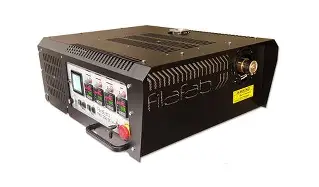
The Pro 1200 is built around a chassis that emphasizes structural integrity and passive heat dissipation. In professional settings, noise pollution from cooling fans can be a detriment, particularly in audio engineering or sensitive lab environments. The Pro 1200 utilizes a high-grade aluminum alloy casing that acts as a massive heat sink, drawing thermal energy away from the internal processing cores. This design choice allows the device to maintain peak performance levels for extended periods without the aggressive thermal throttling that plagues thinner, more "lifestyle-oriented" devices. The weight of the unit, while substantial, inspires confidence in its durability, suggesting it can withstand the rigors of field use and frequent transport.
Internal architecture is where the Pro 1200 truly excels. At its heart lies a proprietary processing cluster designed for asynchronous tasks. Unlike standard chips that prioritize burst speeds for marketing-friendly benchmarks, the Pro 1200 is tuned for stability. In real-world use cases, such as rendering complex 3D environments or processing large datasets in real-time, the consistency of the clock speed is far more valuable than a high peak that cannot be maintained. Professionals care about predictability; they need to know that a task started at 9:00 AM will finish exactly when the progress bar predicts, regardless of the ambient temperature of the server room or studio.
Connectivity remains a cornerstone of the Pro 1200’s appeal. It avoids the trend of reducing port variety in favor of a single standardized connector. Instead, the Pro 1200 offers a robust array of interfaces that cater to legacy systems and cutting-edge peripherals alike. This inclusivity is vital for professionals who own expensive, high-quality gear that might not yet support the latest wireless or unified standards. By providing dedicated lanes for various data streams, the Pro 1200 ensures that peripheral congestion is virtually nonexistent. This allows for a multi-monitor setup, high-speed external storage arrays, and precision input devices to function simultaneously without latency or bandwidth drops.
Real-World Use Cases and Professional Demand
Consider the environment of a contemporary film production set. Time is the most expensive commodity, and data management is a constant struggle. The Pro 1200 serves as a central hub for "digital imaging technicians" who must offload terabytes of footage, apply preliminary color grades, and create backups—all while the next scene is being lit. The Pro 1200’s high-speed data bus allows for simultaneous writes to multiple targets, significantly reducing the bottleneck between the camera's sensor and the editor's desk. It is this ability to handle high-throughput tasks without crashing or overheating that justifies the professional designation.
Find top-rated Electronics products at great prices.
Shop Amazon →In the field of data science and remote sensing, the Pro 1200 is frequently employed as an "edge" device. It is capable of running localized machine learning models on incoming data streams from environmental sensors without needing to ping a cloud server constantly. This is essential in regions with poor connectivity or for projects where data privacy is paramount. Buy-in for the Pro 1200 in these sectors is driven by its reliability; it is a device that can be deployed in a cabinet and left to run for weeks without requiring a reboot. Professionals in these fields value the hardware-level encryption and secure boot features that protect sensitive intellectual property at the source.
Pros and Cons: A Balanced Perspective
Even the most advanced hardware has trade-offs. The Pro 1200 is no exception, and understanding where it shines and where it stumbles is crucial for any potential buyer.
- Pro: Sustained Performance. The thermal management system allows for 24/7 operation at high load without the performance degradation typically seen in consumer electronics.
- Pro: Modular Integration. It plays well with others, offering an array of ports and protocols that satisfy both modern and legacy equipment requirements.
- Pro: Built Quality. The industrial-grade chassis is resistant to minor impacts and environmental stressors like dust and vibration.
- Pro: Software Flexibility. The firmware is designed to be unobtrusive, allowing professionals to install custom OS shells or specialized drivers without excessive gatekeeping from the manufacturer.
- Con: Weight and Portability. While it fits in a standard gear bag, its weight is noticeable. It is more of a "portable workstation" than a "mobile device."
- Con: Power Consumption. Exceptional performance requires significant wattage. Using this device away from a power outlet requires substantial external battery solutions.
- Con: Price Point. It is positioned in the upper echelon of the market. While the value proposition is high for businesses, it represents a significant capital expenditure for independent contractors.
Technical Comparison: Pro 1200 vs. Industry Standards
To understand the Pro 1200’s position, it is helpful to compare it against the broader market categories of standard workstations and premium consumer laptops. The following table highlights key differences in philosophy and execution.
| Feature | Standard Consumer High-End | Pro 1200 | Industrial Rackmount Server |
|---|---|---|---|
| Thermal Design | Active (Thin fan, prone to throttling) | Hybrid Passive/Active (Heavy heat sink) | High-Flow Forced Air (Loud, dedicated cooling) |
| Duty Cycle | 8–10 hours per day | 24/7 Continuous | 24/7 Continuous |
| I/O Variety | Minimalist (Optimized for adapters) | Comprehensive (Native connections) | Specialized (Fiber, high-density) |
| Portability | High (Ultralightweight) | Medium (Ruggedized, heavy) | None (Fixed installation) |
| User Serviceability | Low (Often soldered components) | Medium (Access to storage/RAM) | High (Hot-swappable parts) |
The Professional Buying Guide for the Pro 1200
Purchasing the Pro 1200 should not be an impulsive decision based on marketing hype. Instead, it should be a calculated move based on the specific bottleneck your current workflow faces. Professionals should assess their needs based on three primary pillars: environmental conditions, data throughput requirements, and the necessity for uptime.
Assessing Environmental Needs
If your work takes you into the field—whether that be a construction site, a humid tropical forest for research, or a dusty warehouse—the Pro 1200 is a logical choice. Its lack of large, open vents (thanks to its heat-sink-casing design) prevents the ingress of particles that usually destroy consumer laptops. However, if your work is purely office-bound in a climate-controlled room, you might be paying for "ruggedization" that you don't strictly need. In those cases, a standard high-end desktop might offer more raw power for the same price, though it lacks the Pro 1200’s unique balance of mobility and stability.
Shop the latest Electronics picks on Amazon.
Shop Amazon →Data Throughput and Connectivity
Analyze the peripherals you use daily. Do you rely on multi-channel audio interfaces, 10GbE networking, or dual high-refresh-rate displays? The Pro 1200 is built for users who answer "yes" to all of the above. The internal architecture ensures that the controllers for these ports are on separate lanes, preventing the "stutter" that occurs when a high-speed hard drive and a high-resolution monitor fight for the same bandwidth on a lesser machine. If you primarily work with web-based applications or low-resolution files, the Pro 1200’s power will remain largely untapped.
The Uptime Requirement
In professional services, downtime is a reputation killer. If you are live-streaming an event, managing a production render, or monitoring a live experiment, a system crash is unacceptable. The Pro 1200 is designed for those who require 99.9% reliability. This reliability is baked into the hardware through higher-quality capacitors, better-shielded internal cabling, and firmware that prioritizes stability over "fancy" features. Buyers should consider the Pro 1200 as an insurance policy for their deliverables.
Scalability and Future-Proofing
One aspect professionals often overlook is the ease of maintenance. The Pro 1200 offers a level of access to internal components that is becoming increasingly rare. Being able to upgrade the storage or RAM without sending the device back to the manufacturer is a major benefit. It extends the life of the unit by several years, allowing it to grow as software requirements become more demanding. When calculating the "True Cost of Ownership," this modularity often makes the Pro 1200 a more economical choice over a five-year period compared to cheaper, disposable alternatives.
Conclusion
The Pro 1200 is a testament to the idea that there is still a place for uncompromising, specialized hardware in an era of homogenization. It successfully balances the conflicting demands of power and stability, offering a platform that supports the professional rather than getting in their way. While its weight and price point may deter the casual enthusiast, these characteristics are the hallmarks of a tool that is built to last and designed to work. In the final analysis, the Pro 1200 isn't just another gadget in the electronics category; it is a foundational piece of equipment for those who take their craft seriously. For the professional who has been waiting for a device that respects their workflow and survives their workday, the Pro 1200 represents the current gold standard in its class.