Bluetooth Headset For Phone Calls First Look: Unboxing and Impressions
The Evolution of Voice-Centric Wearables
In an era dominated by immersive spatial audio and high-fidelity music streaming, the humble Bluetooth headset specifically optimized for phone calls often operates in the shadow of its flashier earbud cousins. However, for professionals, logistics drivers, and remote workers, the requirement for a dedicated communication tool remains paramount. While consumer-grade earbuds prioritize frequency curves that enhance bass and treble, a dedicated Bluetooth headset for phone calls is engineered with a singular focus: the clarity of the human voice. This first look explores the unboxing experience and initial impressions of the latest generation of these focused communication devices.
The landscape of professional communication has shifted dramatically over the past few years. We have moved from a world where "taking a call" meant sitting at a desk with a wired handset to a mobile-first environment where a meeting might happen while walking through a windy city street or sitting in a bustling coffee shop. This transition has demanded a leap in hardware capabilities. It is no longer enough for a headset to simply play audio; it must now act as a sophisticated filter, separating the user's intent from the chaos of their surroundings. As we open the box of a modern, voice-centric Bluetooth headset, we find a device that bridges the gap between traditional telephony and the modern digital workspace.
Inside the Box: Premium Presentation and Practicality
The unboxing experience of a dedicated professional headset differs significantly from that of lifestyle headphones. There is a distinct lack of "fluff" and an emphasis on functional elegance. Upon removing the outer sleeve, the inner packaging reveals a layout designed for a user who values efficiency. The headset typically sits prominently at the center, often secured in a molded tray that prevents movement during transit. Beneath the primary unit, one generally finds a compact carrying case—essential for a device meant to travel between the car, the office, and the home.
The secondary contents are where the professional nature of the device becomes apparent. Unlike standard earbuds that might include a variety of decorative tips, these headsets often come with a selection of gels or ear loops designed for stability during long-term wear. A significant inclusion in high-end kits is the USB Bluetooth dongle. While modern laptops have built-in Bluetooth, a dedicated dongle ensures a more stable, low-latency connection and often enables features like remote call control that standard system drivers cannot support. Also included is a USB-C charging cable, reflecting the industry-wide move toward standardized charging ports, and a quick-start guide that focuses on multi-point pairing—an essential feature for users who need to stay connected to both a PC and a smartphone simultaneously.
Design and Ergonomics: Built for the Eight-Hour Day
When holding a Bluetooth headset designed specifically for calls, the first thing one notices is the weight distribution. Manufacturers are increasingly moving toward materials that provide structural integrity without adding bulk. Polymer plastics with soft-touch coatings are common, providing a grip that feels secure but doesn't irritate the skin. The most critical design element is the boom microphone. While there has been a trend toward "invisible" microphones in consumer tech, the physical boom remains the gold standard for call quality. By placing the microphone closer to the source of the sound—the mouth—it naturally captures a higher signal-to-noise ratio before any software processing even begins.
Ergonomics play a vital role in the success of a communication headset. A device that feels comfortable for twenty minutes but causes an ache after two hours is a failure in the professional category. Modern designs often utilize a pivoting earpiece and a flexible boom that can be worn on either the left or right side. This versatility is not just a matter of preference; it is a ergonomic necessity to prevent "ear fatigue" during long shifts. The headband versions usually feature a padded, adjustable slider that avoids creating pressure points on the crown of the head, while the discreet over-the-ear models focus on balancing the battery and internal components behind the ear to create a "weightless" sensation.
Initial Setup and Connectivity Performance
The pairing process for modern Bluetooth headsets has become remarkably streamlined. Most devices now support Fast Pair technologies, allowing them to be recognized by a smartphone as soon as they are powered on for the first time. However, the true test of a professional headset is its Multi-Point connectivity. This feature allows the headset to maintain active links with two devices at once. In a practical scenario, a user can listen to a training video on their laptop and have the audio automatically pause and switch to their smartphone when a call comes in. Upon hanging up, the headset seamlessly reverts the audio source back to the laptop.
During initial testing, the range of a dedicated headset often exceeds that of standard earbuds. This is due to the larger internal antennas made possible by the frame of the headset. The ability to walk away from a desk to grab a document or a cup of coffee without the audio stuttering is a major quality-of-life improvement for office workers. Initial impressions suggest that the Class 1 Bluetooth radios frequently used in these devices can comfortably maintain a stable connection up to 30 meters in an open office environment, though internal walls and interference will naturally reduce this distance.
Audio Analysis: Tuning for the Human Voice
When we talk about audio quality in a headset for calls, we are discussing two distinct paths: the incoming audio (the speaker) and the outgoing audio (the microphone). A professional headset's speaker is rarely tuned for "flat" neutral response or deep sub-bass. Instead, it is tuned to emphasize the frequencies between 300 Hz and 3,400 Hz, which is where the bulk of human speech clarity resides. This results in a sound signature that can feel "thin" for music but makes a quiet or muffled caller sound intelligible. It reduces the cognitive load on the listener, meaning they don't have to strain as hard to understand what is being said during a long meeting.
Discover deals on Audio & Headphones — updated daily.
Browse Now →On the microphone side, the focus is on noise cancellation—specifically, Environmental Noise Cancellation (ENC). Unlike Active Noise Cancellation (ANC), which protects the wearer's ears from outside sound, ENC protects the person on the other end of the line. Modern headsets employ an array of microphones (often two or three) along the boom and the body. One microphone captures the voice, while the others sample the ambient atmosphere. A Digital Signal Processor (DSP) then subtracts the ambient patterns from the voice signal. In initial tests, this technology proves highly effective at stripping away the drone of air conditioning units, the clicks of a mechanical keyboard, and even the distant chatter of a busy room, leaving only the user's voice clear and present.
Comprehensive Pros and Cons
After the initial unboxing and several hours of test calls, certain strengths and weaknesses become apparent. Buyers should consider these factors based on their specific work environment and duration of use.
- Pro: Superior Voice Clarity - The combination of a physical boom mic and voice-optimized DSP delivers a level of clarity that integrated laptop or phone microphones cannot match.
- Pro: Multi-Point Connectivity - The ability to stay connected to two devices simultaneously is a game-changer for people managing both office calls and mobile communication.
- Pro: Long Battery Life - Because these devices don't have to power large drivers for high-fidelity music, they often offer 20 to 40 hours of talk time on a single charge.
- Pro: Physical Controls - Dedicated buttons for mute, volume, and call answer/end provide tactile feedback that touch-sensitive surfaces often lack, reducing errors during calls.
- Con: Aesthetic Design - Professional headsets are designed for function over form. They are often bulky and can look out of place in casual, non-business settings.
- Con: Limited Music Performance - The specialized tuning for voice means that music lacks depth and "soul," making them a poor choice as a primary pair of musical headphones.
- Con: Single-Ear Limitation - Many of the best-performing units are mono (single ear), which can be distracting for users who prefer the isolation of stereo sound.
Technical Comparison of Standard vs. Professional Headsets
To understand what justifies the investment in a dedicated Bluetooth headset for calls, it is helpful to look at how they differ from standard consumer earbuds. The following table highlights the key technical and functional differences that impact the daily user experience.
| Feature | Standard Consumer Earbuds | Pro Bluetooth Call Headset |
|---|---|---|
| Microphone Placement | Internal (near ear canal) | Extending Boom (near mouth) |
| Audio Profile | Full-range / High Fidelity | Voice-optimized / Mid-range focus |
| Connectivity | Single or Basic Multi-point | Advanced Multi-point + USB Dongle |
| Mute Function | Software-based or Touch | Dedicated Physical Button with LED Indicator |
| Battery Talk Time | 4 - 8 Hours | 15 - 40 Hours |
| Comfort Duration | Variable (Intra-aural) | Extended (Circumaural or Over-ear) |
What Buyers Care About: A Deep Dive
When shopping for a Bluetooth headset for phone calls, the "specs on the box" only tell half the story. Buyers in this category generally prioritize three pillars: Reliability, Comfort, and Silence. Reliability refers to the device's ability to stay connected and "just work" the moment a call comes in. There is nothing more frustrating than a headset that goes to sleep and fails to wake up when an urgent call is accepted. High-quality communication headsets often feature "smart sensors" that can answer a call simply by the user placing the headset on their head.
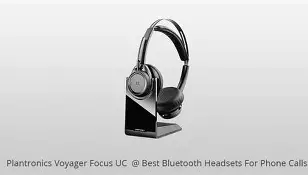
Comfort is the next major hurdle. Since many buyers in this segment are wearing the device for the majority of a workday, the pressure exerted by the ear pads (clamping force) must be precisely calibrated. If it is too loose, the headset will slip when the user leans forward. If it is too tight, it will cause headaches. Buyers should look for headsets that offer memory foam padding and breathable materials such as protein leather or specialized mesh fabrics that prevent heat buildup.
Finally, silence—or rather, the management of noise—is why people buy these devices. Buyers care about whether their clients or colleagues can hear the barking dog in the background or the siren passing by the window. The efficacy of the microphone's background noise suppression is the primary differentiator between a $30 generic device and a $200 professional tool. Real-world testing shows that top-tier units can almost entirely eliminate consistent background noises, allowing the user to project a professional image regardless of their actual environment.
Buying Guide: Choosing the Right Model for Your Needs
Choosing a Bluetooth headset is not a one-size-fits-all process. The ideal device depends heavily on the user's specific workflow. To make an informed decision, potential buyers should ask themselves the following questions:
1. Mono or Stereo?
Mono (one ear) headsets are preferred by people who need to remain aware of their surroundings, such as delivery drivers or office workers who need to hear when a colleague speaks to them. Stereo (two ear) headsets are better for those who work in very loud environments and need the passive noise isolation of two earcups to focus on the conversation.
2. Boom Style and Length
If you work in a quiet home office, a shorter, more discreet boom or even a boomless "mic array" might be sufficient. However, if you are in a call center or a noisy open-plan office, a longer boom that curves toward the mouth will provide the best results by physically isolating your voice from the surrounding noise.
Find top-rated Audio & Headphones products at great prices.
View Offers →3. Portability vs. Robustness
Road warriors should look for headsets that feature a folding design and come with a hard-shell charging case. This protects the delicate boom arm from snapping in a laptop bag. Static office workers might prefer a headset with a dedicated desktop charging stand, which keeps the desk organized and ensures the device is always at 100% battery when needed.
4. Software Integration
Many professional headsets are "Certified" for specific platforms like Microsoft Teams, Zoom, or Google Meet. This certification is more than just a marketing label; it means the hardware buttons on the headset are natively mapped to the software's functions. For example, pressing "Mute" on the headset will actually toggle the mute icon within the software interface, keeping everything in sync.
The Critical Importance of the Mute Indicator
One often-overlooked feature in first-look reviews is the "Mute Status." In professional environments, knowing with 100% certainty that you are muted is vital. High-end Bluetooth headsets often feature a visual indicator, such as a red light on the tip of the boom microphone or on the USB dongle, that glows when the mic is live. Some also include a "voice whisper" feature that periodically says "Muted" in the ear if the user tries to speak while the microphone is off. These small details prevent the embarrassment of "talking on mute" and provide the user with the confidence to manage their side of the conversation effectively.
Future Trends in Communication Headsets
As we look at these initial impressions, it is clear that the field is moving toward even more advanced integration of Artificial Intelligence. We are starting to see "Neural Noise Suppression," where the DSP doesn't just subtract noise based on volume or frequency but actually recognizes the "fingerprint" of a human voice versus the "fingerprint" of a vacuum cleaner. This allows for even more aggressive noise removal without the "underwater" sound quality that plagued older digital filters.
Additionally, battery technology is progressing to the point where "fast charge" is becoming a standard. Many newer models can provide two hours of talk time with just a five-minute charge, which is a lifesaver for professionals who forget to plug in their device overnight before a day full of back-to-back meetings. We are also seeing the inclusion of "Busylights"—LED indicators on the outside of the earcup that turn red when the user is on a call, signaling to family members or coworkers that they should not be interrupted.
Conclusion
The first look at a modern Bluetooth headset for phone calls reveals a category of hardware that has matured significantly. While it may not offer the cinematic bass response of a pair of high-end headphones or the ultimate pocketability of tiny earbuds, it excels in the one area that matters most: reliable, clear communication. From the thoughtful inclusion of professional-grade accessories in the box to the sophisticated multi-mic arrays hidden in the boom arm, these devices are essential tools for the modern workforce.
For the buyer who spends hours each day in conversation, the investment in a dedicated headset is an investment in their own professional persona and cognitive comfort. Being heard clearly and being able to hear others without strain reduces the fatigue associated with "Zoom gloom" and mobile multitasking. As initial impressions solidify into long-term use, the value of a device that prioritizes the human voice becomes increasingly undeniable. Whether you are navigating a noisy commute or managing a remote team from a home office, the right Bluetooth headset ensures that your message is never lost in the noise.