The Ultimate Setup Guide for Your Huawei Matebook Fold Hands On
The arrival of the foldable laptop segment has fundamentally altered the landscape of mobile productivity. While traditional laptops perfected the clamshell and tablets mastered touch-driven portability, the foldable remains the ultimate bridge between these two worlds. The Huawei Matebook Fold enters this competitive arena as a sophisticated piece of engineering, designed to provide a massive workspace that fits comfortably inside a standard messenger bag. For professionals, creators, and tech enthusiasts who have just secured this device, the initial setup process is crucial. It is not merely about clicking through Windows prompts; it is about calibrating a unique dual-state machine to perform optimally in both folded and unfolded configurations.
This guide serves as a comprehensive roadmap for transforming a fresh-out-of-the-box Huawei Matebook Fold into a finely tuned workstation. Setting up a foldable requires a different philosophy than a standard laptop. You are dealing with unique aspect ratios, specialized hinge mechanics, and a screen that demands a specific level of care. From optimizing the display scaling to managing the thermal profile of a chassis that must remain thin enough to fold, every step ensures that the transition between tablet, laptop, and desktop modes is as fluid as the hardware promises.
Understanding the Hardware: First Principles
Before diving into the software configuration, one must appreciate the structural reality of the Huawei Matebook Fold. The device centers around a flexible OLED panel protected by a specialized polymer layer rather than rigid Gorilla Glass. This means the first step in any setup is a physical inspection. Ensure the hinge movement is smooth and that the magnetic attachment points for the detachable keyboard are clear of any debris. Unlike a standard Matebook, the Fold relies on a high degree of integration between its flexible screen and the sensors that detect the fold angle. Calibration begins the moment the device is powered on for the first time.
Buyers typically prioritize three things when selecting this device: screen real estate, portability, and the "wow factor" of the flexible hinge. However, the long-term satisfaction comes from how well the software handles those physical transitions. A common mistake during the initial hours of ownership is treating it like a stationary desktop. Real-world use cases suggest that this device will spend 40% of its time as a 12-inch "laptop" with the magnetic keyboard on the bottom half, and 60% as a full-canvas productivity hub. Your setup should reflect this split personality.
Detailed Product Analysis and Review
The Huawei Matebook Fold is a masterclass in industrial design, yet it presents a steep learning curve for those used to the rigidity of the Matebook X Pro. The primary display is a vibrant OLED panel that reaches impressive peak brightness levels, essential for a device meant to be used in various environments. The color accuracy is tuned for the P3 gamut, making it a viable tool for photo editing and color grading when fully unfolded. However, the most impressive feat is the lack of a prominent crease. Through a complex waterdrop hinge mechanism, the screen curves into a teardrop shape inside the chassis when closed, minimizing the stress on the panel and resulting in a nearly flat surface when opened.
Performance is handled by an ultra-low-voltage processor designed to balance the thermal constraints of a folding chassis with the demands of modern multitasking. While it may not compete with dedicated gaming rigs or heavy-duty workstations, it excels in burst tasks—compiling code, rendering short clips, or managing massive spreadsheets. The integration with the Huawei ecosystem is a standout feature. Through the PC Manager software, users can enjoy Multi-screen Collaboration, allowing a smartphone or tablet to act as a secondary input or a wireless file transfer hub. This ecosystem approach is vital for the foldable experience, as it allows the device to act as the "brain" of a larger mobile office.
The detachable keyboard is another critical component. It is significantly thinner than standard laptop keyboards but retains a surprising amount of tactile feedback. It connects via Bluetooth but charges and pairs through physical pogo pins. During setup, it is essential to ensure the firmware for the keyboard and the M-Pencil (if used) are fully updated, as these peripherals are what truly unlock the versatility of the fold. Without them, it is a high-end tablet; with them, it is a revolutionary workstation.
Discover deals on Laptops & Computers — updated daily.
Shop Amazon →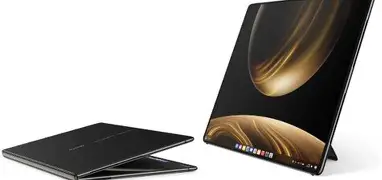
The Essential Setup Steps
1. Initial OS Optimization and Debloating
Upon the first boot into Windows, the priority is removing unnecessary background processes that can drain the battery. Foldable devices have unique power profiles because they often power a much larger screen than standard 13-inch ultraportables. Use the Huawei PC Manager to check for driver updates specifically for the hinge sensors and the display orientation logic. These drivers are what allow the Windows interface to snap from a full-screen view to a split-screen view the moment you fold the device or attach the keyboard.
2. Display and Scaling Configuration
Because the Matebook Fold has an unusual aspect ratio when fully opened, standard Windows scaling (often 150% or 200%) might not be ideal for everyone. For maximum productivity, many users prefer a custom scaling of 175%. This provides enough room for three side-by-side browser windows without making text illegible. Additionally, ensure that "Night Light" or the Blue Light Filter is scheduled. OLED screens can be taxing on the eyes during long sessions, and the Matebook’s software offers a "Natural Tone" setting that adjusts the white balance based on ambient lighting—enable this immediately for a more comfortable reading experience.
3. Gesture Control and Haptic Feedback
The trackpad on the detachable keyboard and the screen itself support a variety of gestures. In the Huawei settings, you can customize "Knuckle Gestures" to take screenshots or screen recordings. For a foldable, these shortcuts are invaluable because they allow you to capture information quickly while in tablet mode without hunting for keyboard shortcuts. If the device supports haptic feedback on the virtual keyboard (for when you don't have the physical one attached), spend time adjusting the vibration intensity to provide a sense of tactile confirmation.
4. Virtual Desktop and Snap Layouts
Windows 11 Snap Layouts are the "secret sauce" for foldable laptops. Hover over the maximize button on any window to see the grid options. On the Matebook Fold, the "four-pane" grid is particularly effective when the device is fully unfolded in portrait mode. You can have a reference document at the top, a research browser in the middle-left, a chat application in the middle-right, and a media player at the bottom. Setting up these specific "Workspaces" using the Virtual Desktop feature allows you to switch from a "Deep Work" environment to a "Communication" environment with a simple swipe.
Pros and Cons of the Foldable Experience
- Pro: Unmatched Screen-to-Footprint Ratio. You essentially carry a 17-inch monitor in the body of a 12-inch laptop, providing a significant advantage for mobile professionals who need vertical space for coding or data analysis.
- Pro: Versatile Form Factors. The ability to use it as a book, a laptop, a tablet, or a desktop monitor makes it a true "all-in-one" device that replaces multiple gadgets.
- Pro: OLED Visual Excellence. The deep blacks and high contrast of the folding OLED panel make it one of the best consumption devices for HDR content and professional design work.
- Con: Durability Concerns. The flexible screen is inevitably more delicate than glass, requiring a shift in user habits, such as ensuring no pens or debris are left on the screen before folding it closed.
- Con: Battery Life Variability. Driving a large, high-resolution OLED panel in full-screen mode consumes significantly more power than using it in the folded "laptop mode," making battery management a constant consideration.
- Con: Premium Price Point. The engineering required for the hinge and flexible display places this in a luxury category, demanding a high initial investment compared to traditional flagship laptops.
Feature Comparison: Foldable vs. Traditional Ultraportables
| Feature | Huawei Matebook Fold | High-End Traditional Laptop |
|---|---|---|
| Display Type | Flexible OLED (12" folded / 17" unfolded) | Rigid IPS or Mini-LED (13" to 14" fixed) |
| Main Use Case | Hybrid productivity, content creation, multi-window multitasking | Traditional office work, stable typing, long-duration mobile use |
| Weight | Lightweight chassis, though combined with keyboard it equals ultraportables | Lightest models can be under 1kg with integrated keyboards |
| Input Methods | Touch, Pen, Detachable BT Keyboard, Virtual Keyboard | Fixed Keyboard, Trackpad, optional Touch |
| Surface Durability | Polymer / Plastic (Scratches more easily) | Glass (Shatter-prone but highly scratch-resistant) |
| Thermal Management | Passive or highly constrained active cooling | Advanced fan systems and vapor chambers |
Buying Guide: Is the Matebook Fold Right for You?
Deciding to purchase a foldable laptop like the Huawei Matebook Fold involves more than just budget—it involves a workflow audit. This device is specifically engineered for the "Digital Nomad" or the executive who spends a significant amount of time in transit but requires a large screen for reviewing blueprints, financial models, or creative layouts once they reach their destination. If your work primarily involves heavy typing in cramped environments like economy airplane seats, the detachable nature of the keyboard might be more of a hurdle than a benefit. However, if you crave the ability to set up a "mobile office" in a café or library, the Fold is peerless.
Prospective buyers should care deeply about the warranty and support options for the flexible panel. Because this technology is still evolving, having a manufacturer-backed protection plan is highly recommended. Furthermore, consider your existing ecosystem. If you already use a Huawei smartphone and tablet, the "Super Device" features allow for seamless file dragging and screen sharing that significantly increases the value of the Matebook Fold. If you are deeply entrenched in other ecosystems, you will still get the hardware benefits, but the software integration will require more manual work.
Looking for the best Laptops & Computers deals on Amazon?
Browse Now →Another factor to consider is the M-Pencil integration. For architects and illustrators, the Fold represents a digital drafting table. The transition from a small laptop to a large, flat canvas is something no traditional laptop can mimic. If you find yourself carrying both an iPad Pro and a MacBook, the Matebook Fold is the device designed to consolidate those two bags into one. Ensure you are comfortable with the "folded thickness," as it will be thicker than a standard laptop when closed, though its footprint (width and depth) will be smaller.
Optimizing the Long-Term Experience
Once the initial setup is complete, maintaining the Matebook Fold is about preservation. Use the internal battery management settings to limit the maximum charge to 80% if you plan on using it plugged into a wall for long periods. This is especially important for foldables, as heat from charging can affect the adhesive layers of the flexible screen over several years. Regularly clean the screen with a dry microfiber cloth, avoiding any harsh liquids that could seep into the hinge mechanism.
You should also stay aggressive with software updates. Manufacturers frequently release BIOS updates for foldable devices that refine the fan curves and the voltage delivery to the display. These small tweaks often result in noticeable improvements to both the smoothness of the UI and the overall battery life. As Windows 11 continues to evolve with better support for foldable "postures," your device will actually become more capable over time as the OS learns to better handle the unique hardware states.
Conclusion
The Huawei Matebook Fold Hands On represents a bold step into the future of personal computing. It is a device that demands respect, both in terms of the financial investment and the care required to operate it. By following a structured setup guide—optimizing the display for your specific eyesight, mastering the Snap Layouts, and integrating the device into your wider digital ecosystem—you move past the novelty of the folding screen and into a realm of heightened productivity. The transition from a compact, 12-inch mobile companion to an expansive 17-inch workstation is not just a party trick; it is a fundamental shift in how we interact with information. While the technology is premium and the screen requires a delicate touch, the freedom it provides to work anywhere without compromising on screen size is the ultimate luxury for the modern professional. Setting it up correctly today ensures that this centerpiece of your tech arsenal remains fast, fluid, and functional for years to come.